

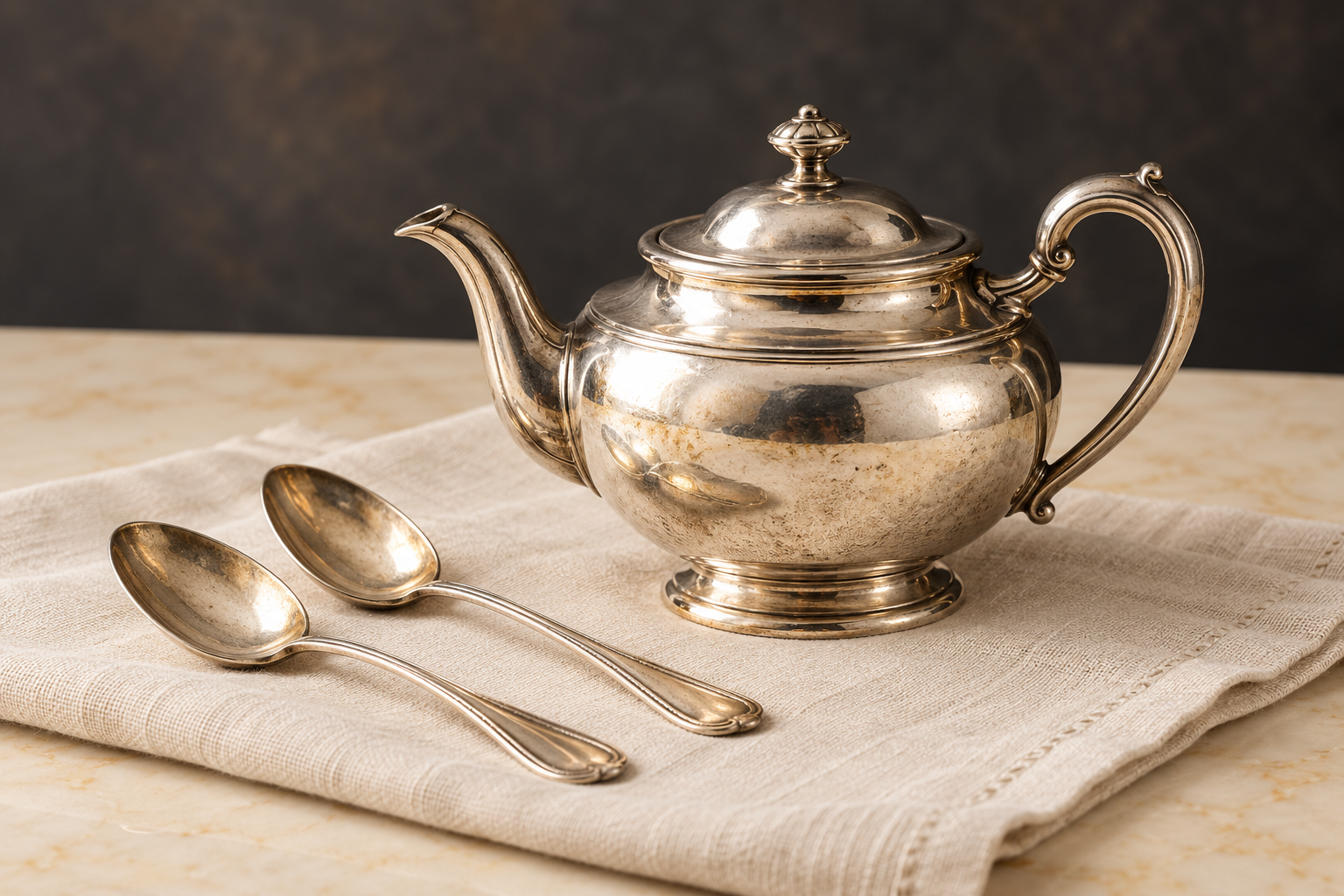
14 Oct Sterling Silver at Auction: Marks, Condition, and Everyday Appeal
Silver brings a distinctive character to a room or table. A graceful teapot, a well proportioned bowl, or a carefully chosen serving piece can connect everyday living with the pleasure of collecting. At auction, the variety can be especially appealing, with individual objects and grouped lots offering different ways to begin or expand a collection.
Buying sterling silver at auction starts with looking beyond shine. Materials, identifying marks, condition, completeness, and intended use all deserve attention. For collectors in Stuart and throughout South Florida, a little preparation can turn a beautiful catalog photograph into a more informed decision about whether an object belongs in their home.
Understand the material being described
Sterling silver and silver plate are different materials, even when their surfaces appear similar in a photograph. The FTC describes sterling silver as containing 92.5 percent pure silver and notes that products may carry a 925 mark. Silver plate has a layer of silver applied over another metal. Read the catalog’s actual description carefully.
Do not classify a piece solely because it looks bright, feels substantial, or has an unfamiliar stamp. Ask what the auction house has identified and whether photographs of the marks are available. If the description remains uncertain, make that uncertainty part of your decision. A confident guess is not a substitute for an adequately supported identification.
Use identifying marks as a starting point
Look for clear photographs of the underside, back, or other location where marks are described. Keep those images with the lot information so you can ask focused questions. A worn stamp or a partially visible symbol may require further research. Avoid assigning a maker or date from a tiny photograph that cannot support the conclusion.
If you are comparing examples, pay attention to form, decoration, and construction as well as markings. A close visual resemblance can be interesting without establishing that two objects share the same origin. When an attribution is important to your budget, ask for clarification and consider whether an independent specialist’s opinion is appropriate before bidding.
Examine condition from several angles
Silver objects can show dents, scratches, distorted edges, repairs, or areas that deserve closer examination. Ask for additional views when a handle, foot, hinge, lid, or interior is important to your decision. A polished front view can be attractive while leaving practical questions unanswered. Review any available condition information alongside the photographs.
Think about the consequences of the condition described. A small mark may be acceptable on a decorative object but more noticeable on a simple, undecorated surface. A lid that does not fit as expected may affect your enjoyment of a teapot. Decide what matters to you before competition encourages you to overlook it.
Check exactly what a grouped lot contains
When viewing flatware or a service, count the pieces by type rather than relying only on the total. Determine whether the group includes the items you need and whether the patterns appear consistent. A large collection of miscellaneous pieces may be appealing, but it serves a different purpose from a coordinated service intended for regular entertaining.
Save a written breakdown with the lot number. Note any boxes, cases, accessories, or other components expressly included in the description. An object shown nearby in a photograph may not necessarily belong to the lot. Ask when the presentation leaves room for doubt, and avoid assuming that missing pieces will be easy to find later.
Consider how the object will live with you
Measure your intended display or storage space and compare it with the dimensions in the catalog. A serving tray may need more room than a photograph suggests. A tall centerpiece can affect sightlines across a dining table. Thinking about placement helps turn a promising acquisition into an object you can actually enjoy.
Be realistic about your interest in maintenance. Some collectors prefer occasional display, while others want objects they can use regularly after appropriate assessment. If food use is intended, seek suitable advice about the item’s materials, condition, and fitness for that purpose. A collectible description should not be treated as a guarantee of everyday suitability.
Approach cleaning with restraint
The Canadian Conservation Institute explains that polishing removes some underlying silver along with tarnish. Repeated or aggressive treatment can therefore affect a surface, particularly where plating is thin. Before trying a cleaning method, understand the object and its condition. A valued antique deserves more consideration than a quick attempt to make everything uniformly bright.
Ask a qualified conservator or appropriate specialist about delicate, repaired, mixed material, or unusual pieces. Avoid assuming that a household remedy is suitable simply because it is widely shared online. Collecting is often more rewarding when the first priority is understanding and preserving the object rather than changing its appearance immediately after purchase.
Build a collection around a clear purpose
You do not need a complete service to appreciate silver. A single bowl or serving spoon can be a considered starting point. Decide whether you are drawn to a shape, decorative style, maker, or practical role before adding more pieces.
Leave room for learning between purchases. Revisit your notes after viewing an object in person and record which features mattered most. That habit can sharpen future questions and help your collection develop through deliberate choices rather than the pressure to complete everything at once. A cohesive collection can develop gradually.
Set a complete and comfortable budget
Check the applicable buyer’s premium, taxes, payment terms, and pickup or shipping arrangements for the sale you plan to join. Consider the full cost of acquisition when deciding your limit. Keep anticipated professional services in mind, but do not rely on an unconfirmed repair estimate to justify spending more than you originally intended.
Ask about any essential uncertainty before bidding. Keep the description, measurements, condition notes, and responses together so your decision rests on information you can review. If the lot sells beyond your limit, there is value in maintaining the discipline that made the purchase comfortable in the first place. Another object may fit your collection better.
Neely Auction works with silver, decorative objects, antiques, and other estate property. To discuss a lot or ask about offering items for review, contact the Stuart team at 561-585-8511 or visit NeelyAuction.com. Thoughtful questions help buyers and sellers begin a useful conversation about the pieces they are considering.