

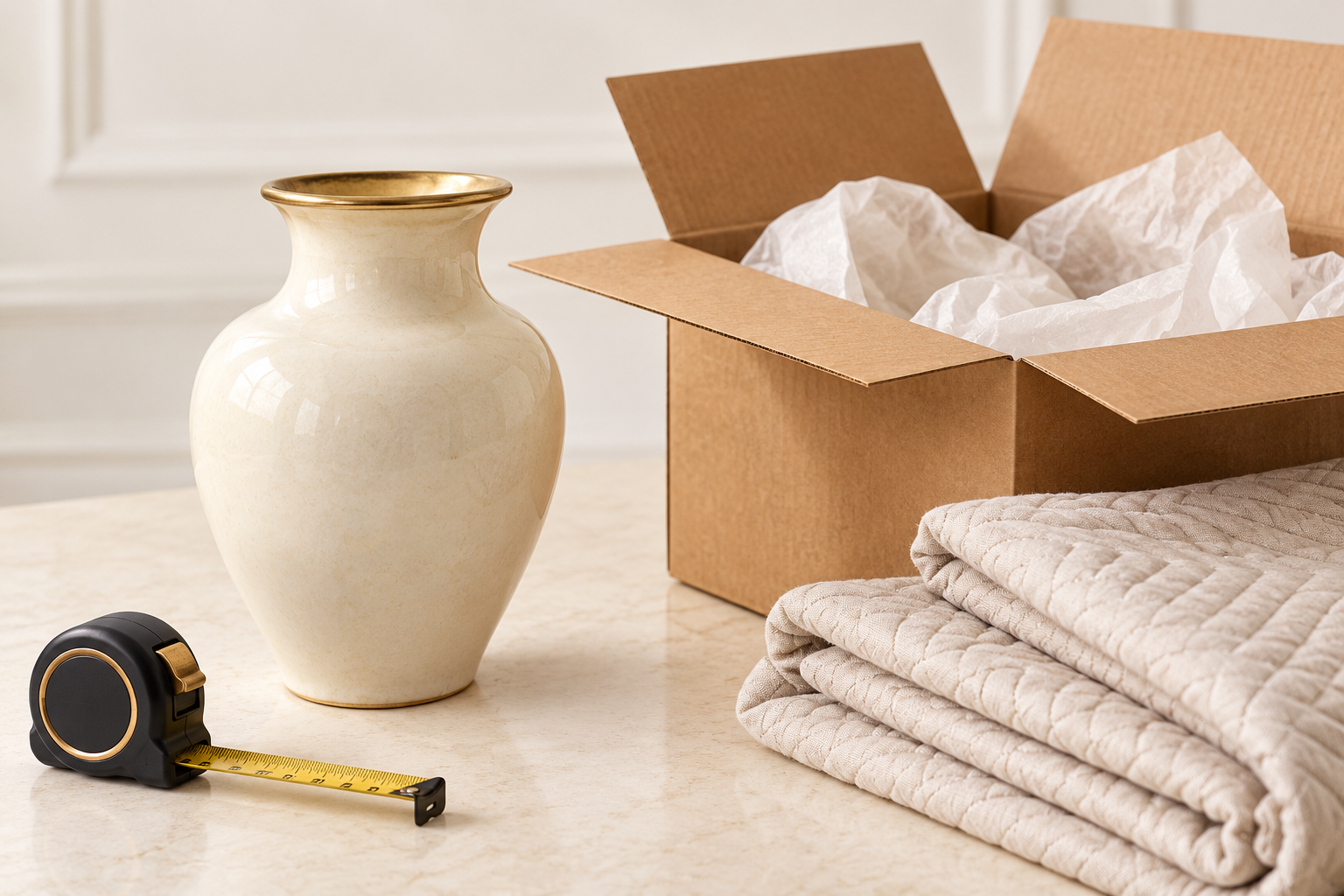
21 Oct After Winning an Auction: Plan Pickup, Packing, and Placement
Winning an auction lot is an exciting moment, but the purchase experience continues after bidding ends. The object still needs to be paid for, collected or shipped, and placed safely in its new setting. Thinking through those steps early can help prevent an attractive acquisition from becoming a difficult logistical problem.
For buyers in Stuart, Palm Beach County, and beyond, auction pickup planning belongs alongside catalog research and budgeting. A small decorative object, a large cabinet, and a fragile sculpture present different practical questions. Before bidding, understand the requirements of the particular sale and consider what receiving that specific lot will involve.
Review collection terms before placing a bid
Read the sale information for pickup location, collection windows, payment requirements, and any stated deadlines or charges. Do not assume that every auction follows the same schedule. A location used for one event may not be the collection point for another. Confirm the details that affect your ability to complete the purchase.
If you will be away, need assistance, or expect a carrier to collect the lot, ask about those arrangements in advance. Make sure the proposed plan is acceptable before relying on it. General articles can help you organize questions, but the applicable sale terms and the auction house’s confirmed instructions govern the actual process.
Match transportation to the object
Check the lot’s dimensions and ask about weight or handling concerns when relevant. A piece may fit comfortably in your room while being difficult to transport in your vehicle. Furniture with projecting elements, framed works, and objects with fragile components deserve particular attention when choosing appropriate assistance and a suitable transport method.
Do not assume the auction house supplies loading labor, packing materials, dismantling, or delivery unless those services are expressly confirmed. Ask who is responsible for each part of the move and what services cost. If specialist transport is appropriate, obtain a proposal before sale day so you can include it in your purchase decision.
Check the route into your home
Measure more than the final display area. Consider doorways, hallways, stairs, elevator openings, and turns along the route. For a large piece, compare those measurements with the actual dimensions rather than judging by eye. Where access is complicated, discuss the situation with a qualified mover before committing to a plan.
In a condominium or managed building, ask about delivery appointments, elevator reservations, insurance documentation, and permitted hours. These are building specific questions, so verify them directly with the appropriate contact. Sharing accurate access information with the carrier can help produce a more useful estimate and reduce surprises when the object arrives.
Ask who will pack a shipped purchase
Determine whether shipping is offered for the lot and who will arrange it. If a separate provider is involved, ask about its process, scope of service, and estimate. Clarify whether the quote includes packing, collection, transportation, and delivery to the location you actually need. Similar sounding services may cover different responsibilities.
Fragile, unusually shaped, valuable, or oversized objects may require specialized handling. Seek advice appropriate to the item instead of applying a general packing method to everything. Seek experienced help for vulnerable projections or uncertain repairs before choosing any packing or handling method. The safest plan begins with understanding the object’s construction, existing condition, and particular vulnerabilities.
Keep purchase and transport records together
Save the lot description, invoice, available condition information, correspondence, and any shipping proposal in one folder. If another person is collecting on your behalf, ask what authorization or documentation is needed. Provide the approved information through the agreed channel. Clear records help the right object reach the right recipient without unnecessary confusion.
Ask about any declared value, coverage, exclusions, and claims process that applies to transportation. Do not assume that a carrier’s basic service covers every possible loss or damage. Where protection matters to your decision, read the relevant terms and obtain clarification. Keep the answers with the other purchase records rather than relying on a verbal impression.
Coordinate several purchases as one practical project
If you win multiple lots, list every item and its separate requirements before booking collection. Several small boxes may be straightforward, while one additional oversized piece can change the vehicle, staffing, and cost needed. Share the complete list with the provider so the estimate reflects the actual collection and delivery.
Keep lot numbers attached to your records and confirm which items have been collected or delivered. If different carriers are involved, make each responsibility explicit. A simple checklist can help you avoid assuming that an object was included in another shipment. Review the list before considering the collection complete and filing away your purchase records.
Prepare for collection and arrival
Bring the information and materials the auction house has confirmed you should provide. Arrive within the agreed arrangements and avoid improvising a move that exceeds your equipment or ability. If the object presents an unexpected handling difficulty, pause and seek appropriate help. Rushing can turn a solvable practical issue into damage or injury.
At home, prepare a clear receiving area before delivery. Keep the intended route accessible and make sure the planned location is ready. For a large or heavy object, ask an appropriate professional about placement and support when needed. A successful delivery includes getting the piece into a suitable position, not merely through the front door.
Inspect thoughtfully and preserve documentation
Follow the carrier’s and sale’s procedures for checking a delivery and reporting concerns. Retain relevant packaging and take clear photographs when appropriate. Record the lot number and any specific issue so communication is precise. If a concern arises, contact the appropriate party promptly rather than assuming that a delay will make it easier to resolve.
Avoid cleaning, repairing, or modifying the item before understanding its condition and any applicable reporting requirements. Once the purchase is settled, keep its documentation as part of your collection records. Details about where and when an object was acquired can be useful later, whether you display it for years or eventually decide to sell.
Neely Auction’s Stuart office is located at 5284 SE Harbor Terrace. For questions about the collection arrangements or shipping information associated with a particular sale, call 561-585-8511 or visit NeelyAuction.com. Confirming the next steps before you bid helps you plan a purchase you can bring home with confidence.